
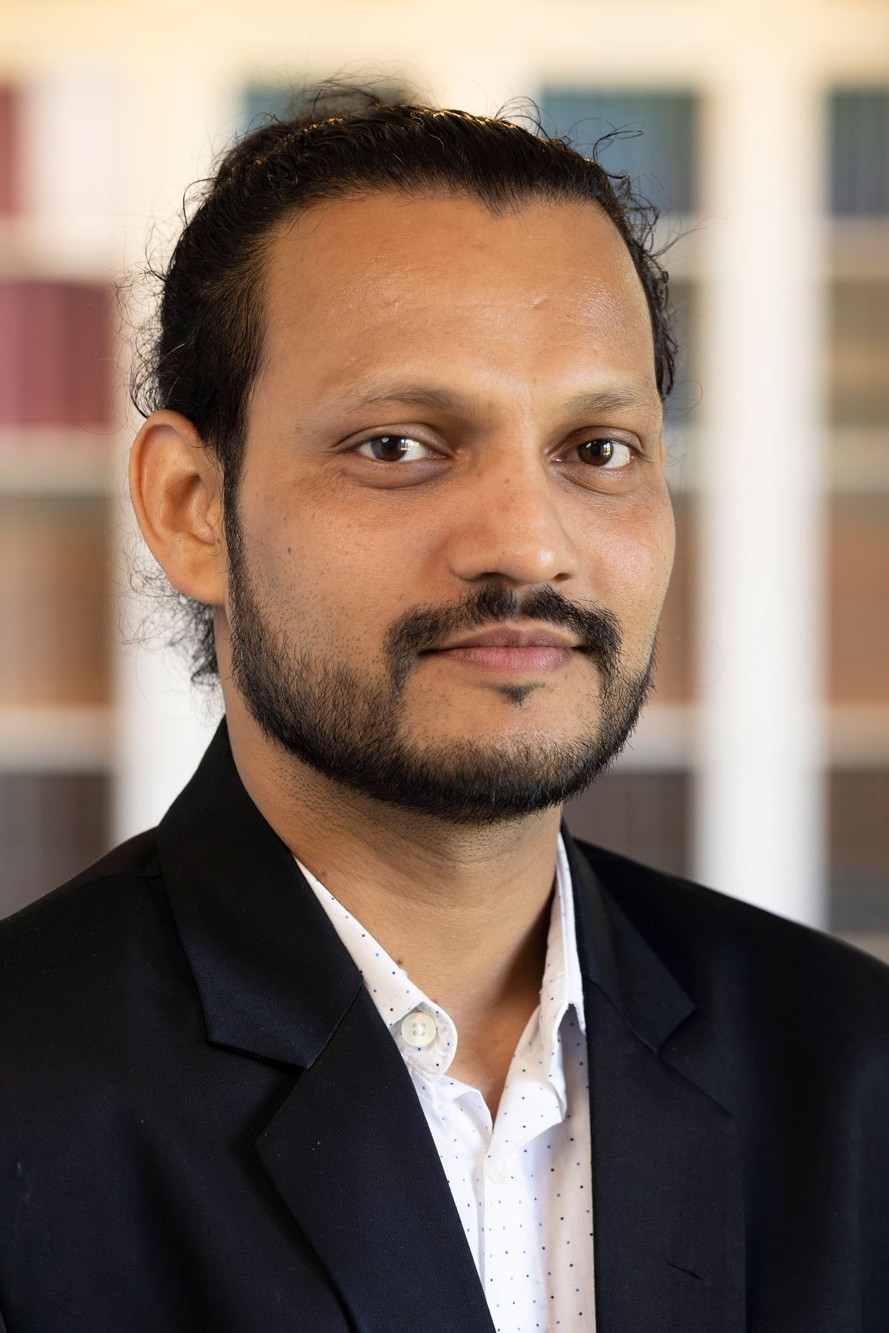
Meet Jaison Jeevan Sequeira, our current Human Past SCAS Junior Fellow


Jaison Sequeira
Jaison Jeevan Sequeira (photo: Mikael Wallerstedt)

We are pleased to welcome Jaison Jeevan Sequeira, Guest Lecturer & Researcher, Department of Applied Zoology, Mangalore University, as our new fellow.

Jaison is a population geneticist interested in the demographic history of South Asia. His doctoral thesis focused on the ancestral history and genomic diversity of linguistic populations along the southwest coast of India. His present work focuses on using bioinformatics tools to identify selection signals and reconstruct the genetic history of isolated groups.

Sequeira gained most recognition for his research on the genetic distinctness of the Koraga community, a proxy for the “Proto-Dravidian” ancestry, within the regional landscape.

During the fellowship, Jaison will investigate the distinct migratory waves of Steppe-derived groups into South Asia. The project will test the hypothesis that these groups entered the region during different periods, leading to varying levels of local admixture and Dravidian linguistic influence.

More information about the current and past fellowship projects can be found on our website under Research/Fellowships.

  • Jaison Sequeira awarded grant from the Royal Physiographic Society of Lund

    Jaison Sequeira awarded grant from the Royal Physiographic Society of Lund

    Dr. Jaison Jeevan Sequeira, Human Past SCAS Junior Fellow, has been awarded 97,000 SEK from the Nilsson-Ehle Endowments 2026 of the Royal Physiographic Society in Lund. The grant supports his project, “Deciphering the dual Steppe ancestry and linguistic stratification in Indo-Aryan populations,” which integrates high-resolution genomic analyses with historical linguistics to investigate whether Steppe-related ancestry…

  • Paleogenomics illuminates mobility and changing lifeways in Chalcolithic Anatolia

    Paleogenomics illuminates mobility and changing lifeways in Chalcolithic Anatolia

    Axel Palmér and our former Human Past SCAS Fellow, Mehmet Somel, are among the co-authors of a new paper in Cell. Congratulations to the whole team! Highlights Abstract Once labelled the “Dark Ages” of Anatolian prehistory, the Chalcolithic period (c. 6000–3000 BCE) was characterised by drastically reduced settlement densities compared with the preceding Neolithic and…

  • Did Paleogermanic originate in Sweden?

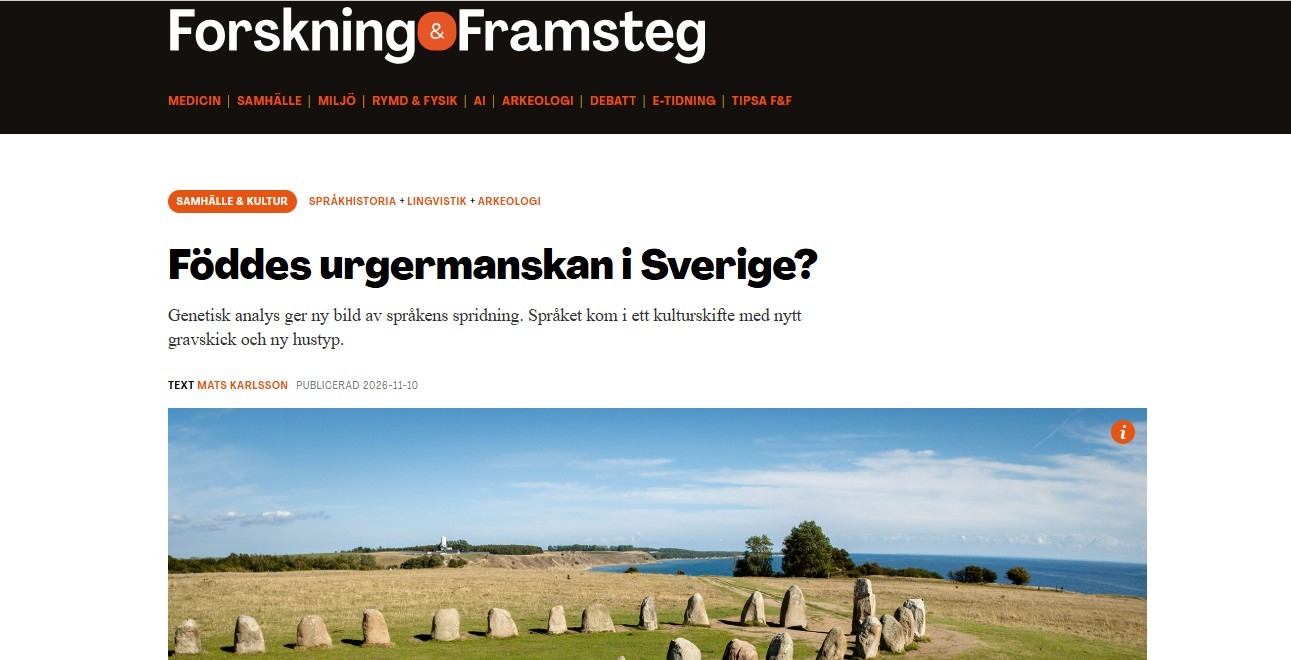
    Did Paleogermanic originate in Sweden?

    Jenny Larsson, one of the Center for the Human Past’s leaders, was approached to comment on the two recent Nature publications by McColl and others (2026) . The co-authors suggest that genetic analyses paint a new picture of how languages spread. According to them, the language arrived during a cultural shift that brought new burial…