Complex maternal genetic landscape in the Koṅkaṇī population of India


Jaison Sequeira
Jaison Jeevan Sequeira

Sequeira, J. J., Kumar, L., van Driem, G., Thangaraj, K., & Mustak, M. S. (2026). Complex maternal genetic landscape in the Koṅkaṇī population of India. Heredity, 1-11. DOI: https://doi.org/10.1038/s41437-026-00896-9

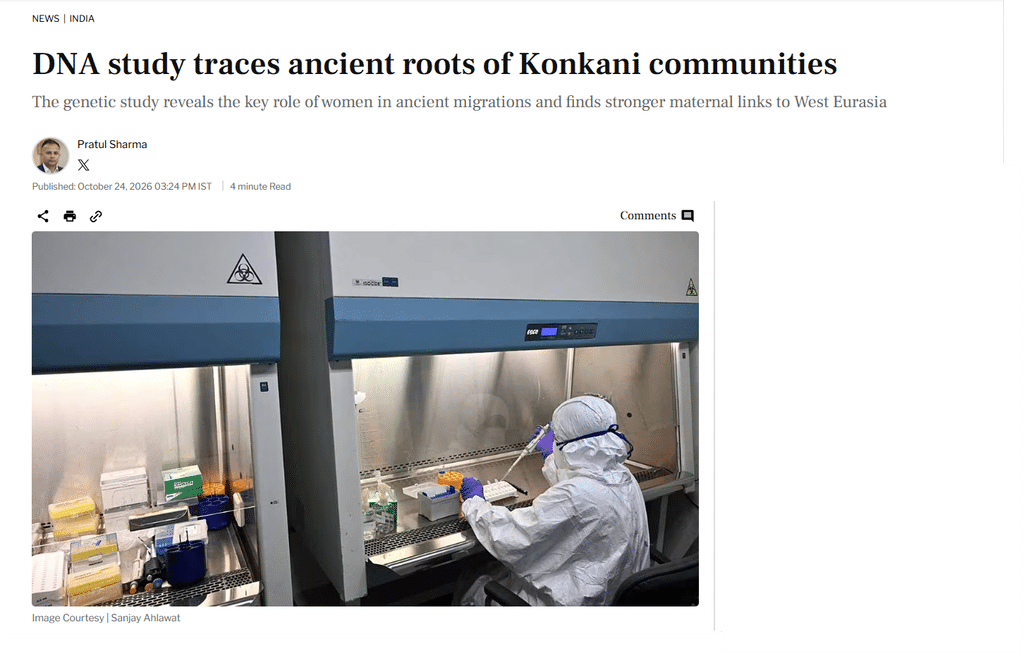
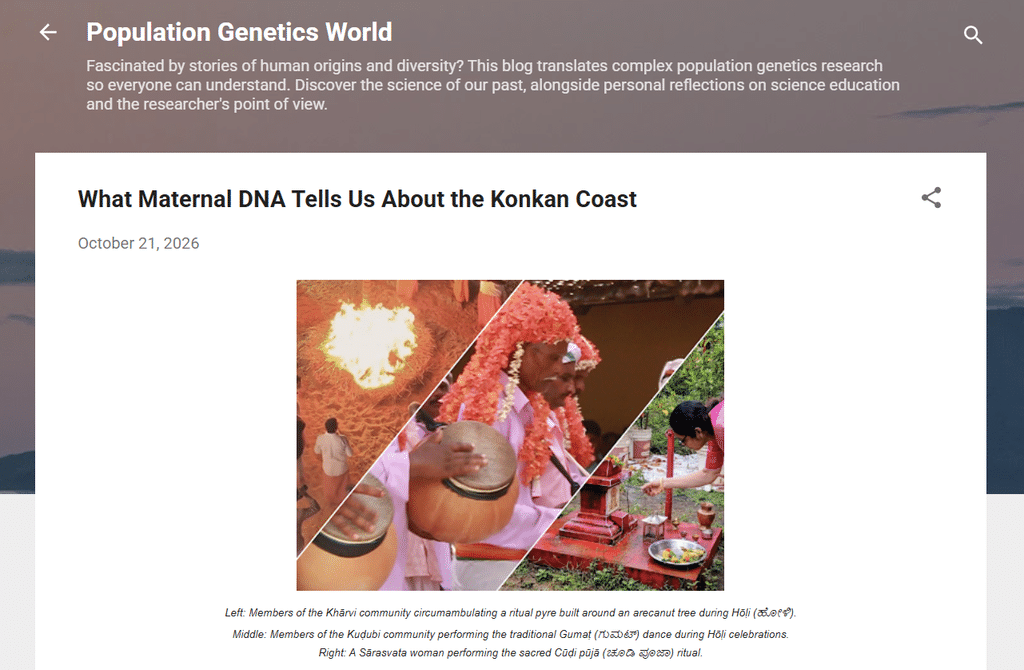
A new genetic study sheds light on the maternal ancestry and historical demographic dynamics of the Konkani population along the southwest coast of India. The research was conducted in collaboration between Prof. M. S. Mustak (Mangalore University) and Padmashri Dr. K. Thangaraj (CCMB, Hyderabad).

Findings reveal that the maternal ancestry of Konkani speakers is largely autochthonous, though the Sārasvata subgroup exhibits a slightly higher proportion of West Eurasian ancestry compared to non-Sārasvata subgroup.

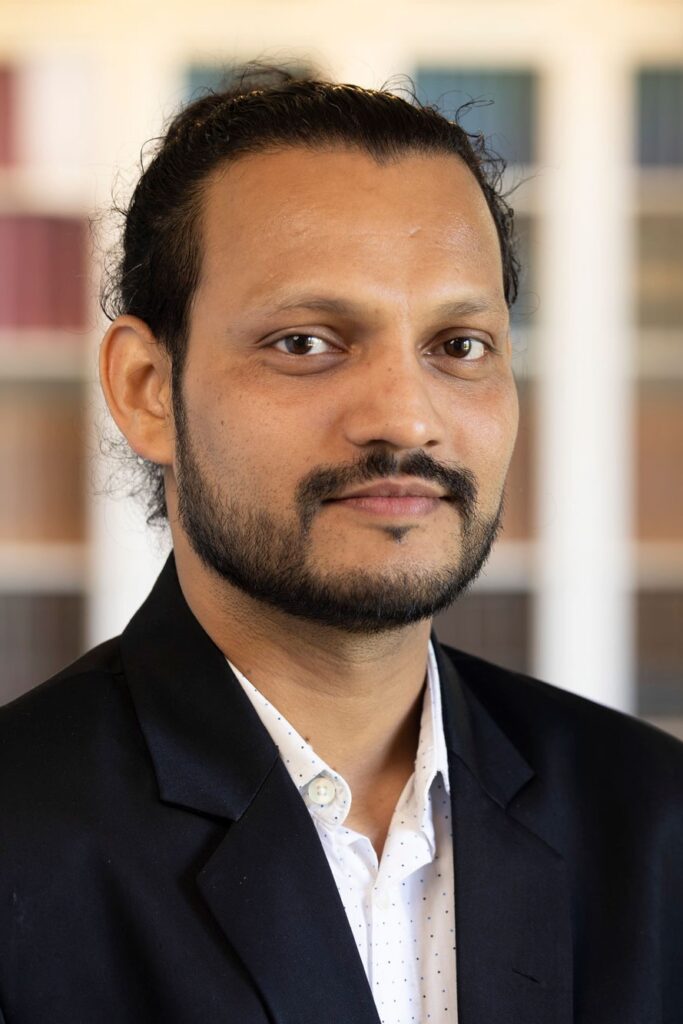
Dr. Jaison Sequeira (currently the Human Past SCAS Junior Fellow) is the lead author of this study. Co-authors include Dr. George van Driem (University of Bern), and Dr. Lomous Kumar (BSIP, Lucknow).


  • Complex maternal genetic landscape in the Koṅkaṇī population of India

    Complex maternal genetic landscape in the Koṅkaṇī population of India

    Sequeira, J. J., Kumar, L., van Driem, G., Thangaraj, K., & Mustak, M. S. (2026). Complex maternal genetic landscape in the Koṅkaṇī population of India. Heredity, 1-11. DOI: https://doi.org/10.1038/s41437-026-00896-9 A new genetic study sheds light on the maternal ancestry and historical demographic dynamics of the Konkani population along the southwest coast of India. The research…

  • Mattias Jakobsson receives an award from the Royal Society of Arts and Sciences of Uppsala

    Mattias Jakobsson receives an award from the Royal Society of Arts and Sciences of Uppsala

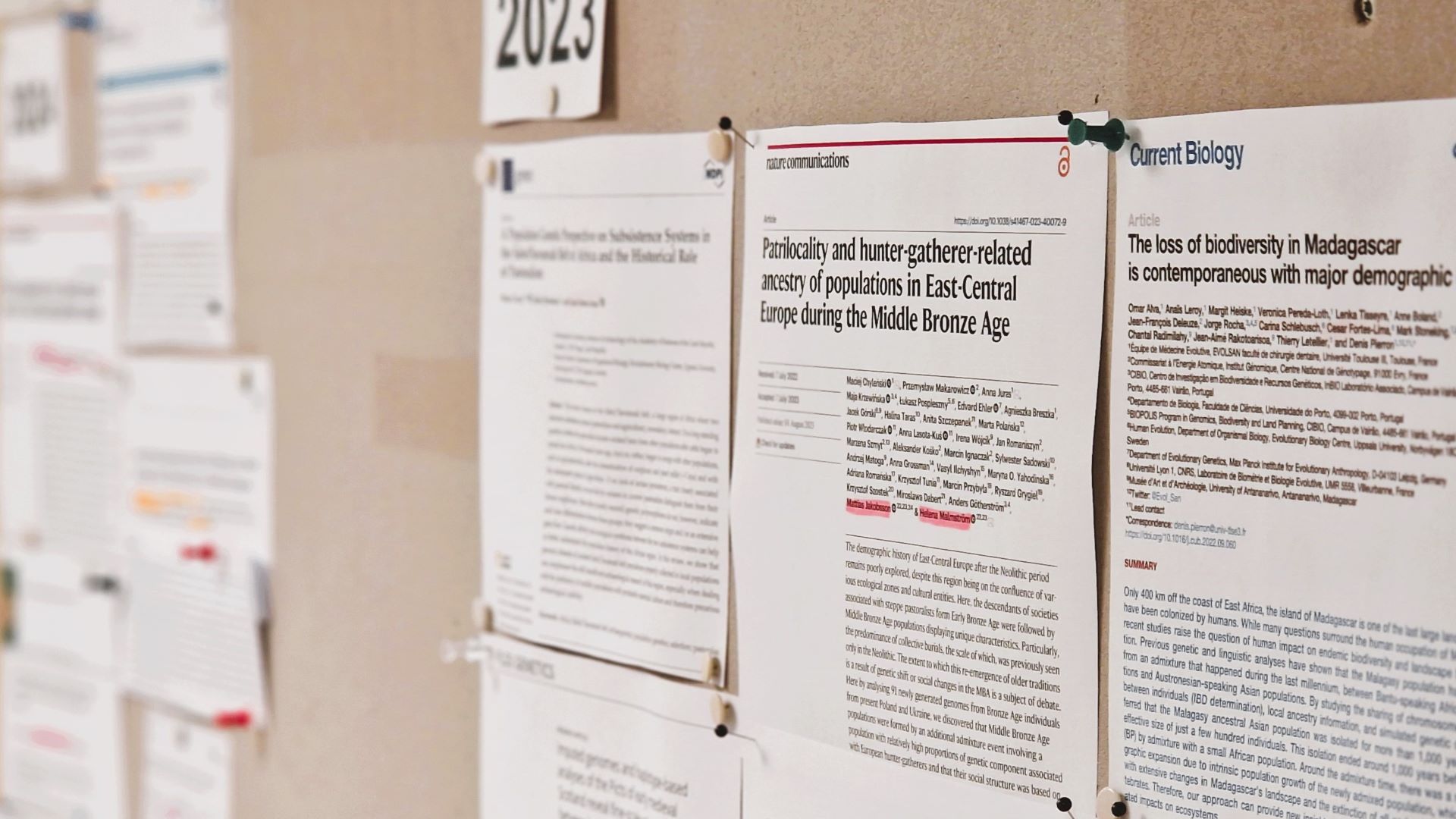
    The 2026 prize for an interdisciplinary achievement of outstanding quality is awarded to Mattias Jakobsson for his distinguished research into human origins and prehistory. By linking Stone Age genomic data with archaeology and linguistics, Jakobsson has shown that there were different populations that engaged in farming, and hunting and gathering. Read more about the Royal…

  • Gut microbes that trace ancient human journeys

    Gut microbes that trace ancient human journeys

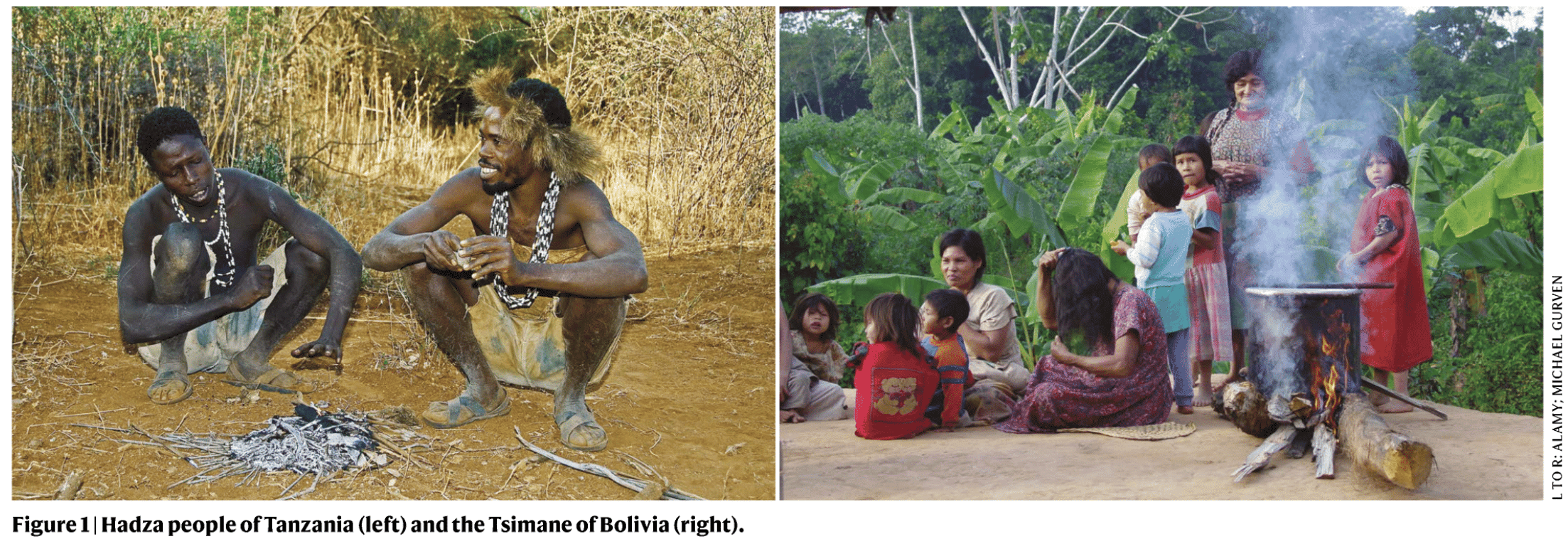
    The newest piece in Nature’s News & Views, co-authored by our PI, Carina Schlebusch and Maja Vukovikj from Human Evolution Program at Uppsala University discusses the study by Carter et al. exploring what our gut microbiomes can tell us about human population history. Humans have never travelled alone. When our ancestors spread out of Africa…