SCAS seminar with Hugo Reyes Centeno: Genomic and Archaeological Insights on the Expansion of Austronesian Speakers into Island Southeast Asia
Swedish Collegium for Advanced Study seminars

Swedish Collegium for Advanced Study seminars
Abstract REAL (REimagining ALgorithmic futures) is a card deck designed to inspire and provoke thinking about algorithmic systems and how they shape human lives, society and potential futures. The cards aim to stimulate thinking and conversations about the values embedded in algorithmic systems, as well as their social and technological implications. They advocate for a more […]

Discussion pre-print: Delbrassine, H., Mezzavilla, M., Vallini, L. et al. Worldwide patterns in mythology echo the human expansion out of Africa, bioRxiv 2025.01.24.634692; doi: https://doi.org/10.1101/2025.01.24.634692 Abstract Similarities between geographically distant mythological and folkloric traditions have been noted for a long time. With the elaboration of large banks of data describing the presence and absence of narrative motifs around […]
Discussion paper: Antonosyan, M., Maurer, G., Mkrtchyan, S., Boxleitner, K., Saribekyan, M., Hovhannisyan, A., … Amano, N., … & Yepiskoposyan, L. (2025). A biomolecular perspective on mobile pastoralism and its role in wider socioeconomic connections in the Chalcolithic South Caucasus. iScience, 28(6). https://doi.org/10.1016/j.isci.2025.112544 Abstract Mobile pastoralism is widely evoked when discussing technological developments, resource procurement, trans-regional interactions, and […]
Abstract What did prehistoric peoples eat? This question can be approached through various scholarly disciplines, including historical linguistics. More specifically, historical linguistics methodologies are tools for addressing the question of what ancient peoples discussed when they spoke about food, including sourcing, preparing, consuming, and sacrificing it. This talk will examine linguistic evidence for the shared […]
The main goal of the retreat is to strengthen collaboration between different disciplines and to learn about each other’s research through presentations and discussions. We hope this retreat will lay a solid foundation for future joint interdisciplinary projects and scientific publications. The day plan includes short(-ish) talks, primarily by junior researchers and PhD students, as […]

ABSTRACT The diversification of the ancient Greek dialects has long posed a major challenge for Greek linguistics. Core questions—how the dialects are related, when they diverged, and how they were distributed in the second millennium BCE—remain the subject of sustained debate, in part because of the limits of traditional methods of historical inference. Over the […]
Discussion paper: Gretzinger, J., Biermann, F., Mager, H. et al. Ancient DNA connects large-scale migration with the spread of Slavs. Nature 646, 384–393 (2025). https://doi.org/10.1038/s41586-025-09437-6 Abstract The second half of the first millennium CE in Central and Eastern Europe was accompanied by fundamental cultural and political transformations. This period of change is commonly associated with […]
Abstract The earliest archaeological dog remains in Melanesia found to date are from Babase Island, New Ireland, and are associated with the Early Lapita layers on the site, thus dating from ca. 3300-3000 BP (Summerhayes et al. 2019, see Manne et al. 2020 for an overview of dog remains in the area). The formation of […]
Abstract Did genetic relatedness matter in Scandinavian Stone Age societies? And if so, how? The increase in the number of individuals with available ancient DNA data, coupled with new tools for assessing relatedness from such data, now allows us to infer kinship patterns beyond broad-scale population structures. This talk will summarise some of the ongoing […]
Abstract Computational methods are increasingly used to reconstruct the deep history of language families, yet different models often produce strikingly different answers. This reflects a general challenge in the historical sciences: we must draw conclusions from fragmentary data shaped by complex processes that cannot be directly observed or experimentally repeated. In this talk, I summarise […]
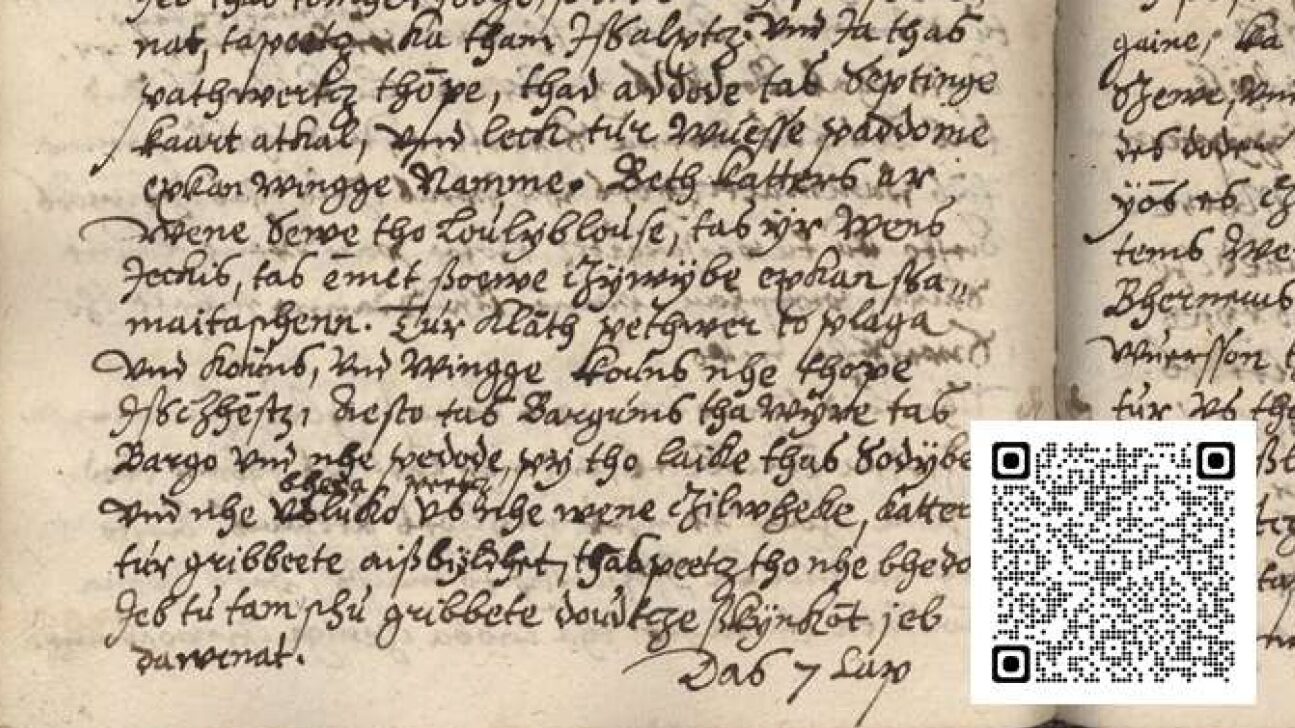
The Higher Seminar in Baltic Languages with Signe Rirdance (SU) and Anthony Jakob (SCAS). The seminar is split into two sessions (with a coffee break in between): 14:00-15:30 – Signe Rirdance (SU): “Deciphering Getzel’s hand in early Latvian: AI and I” 16:00-17:30 – Anthony Jakob (SCAS): “Linguistic ghosts and zombies in modern Standard Lithuanian” Language: […]