Mattias Jakobsson – a Wallenberg Scholar 2024


The prestigious Wallenberg Scholar grant is awarded to leading senior researchers in Sweden every five years. It can be freely used for research with no restrictions. 
The Wallenberg Foundation awarded 118 scientists, from 13 Swedish Universities in 2024. Mattias Jakobsson, one of the Center for the Human Past’s Principal Investigators, is one of the twenty awardees from the Uppsala University. His work in the field of human evolution and population genetics challenges established theories about the cradle of humankind.
??????????????????????????

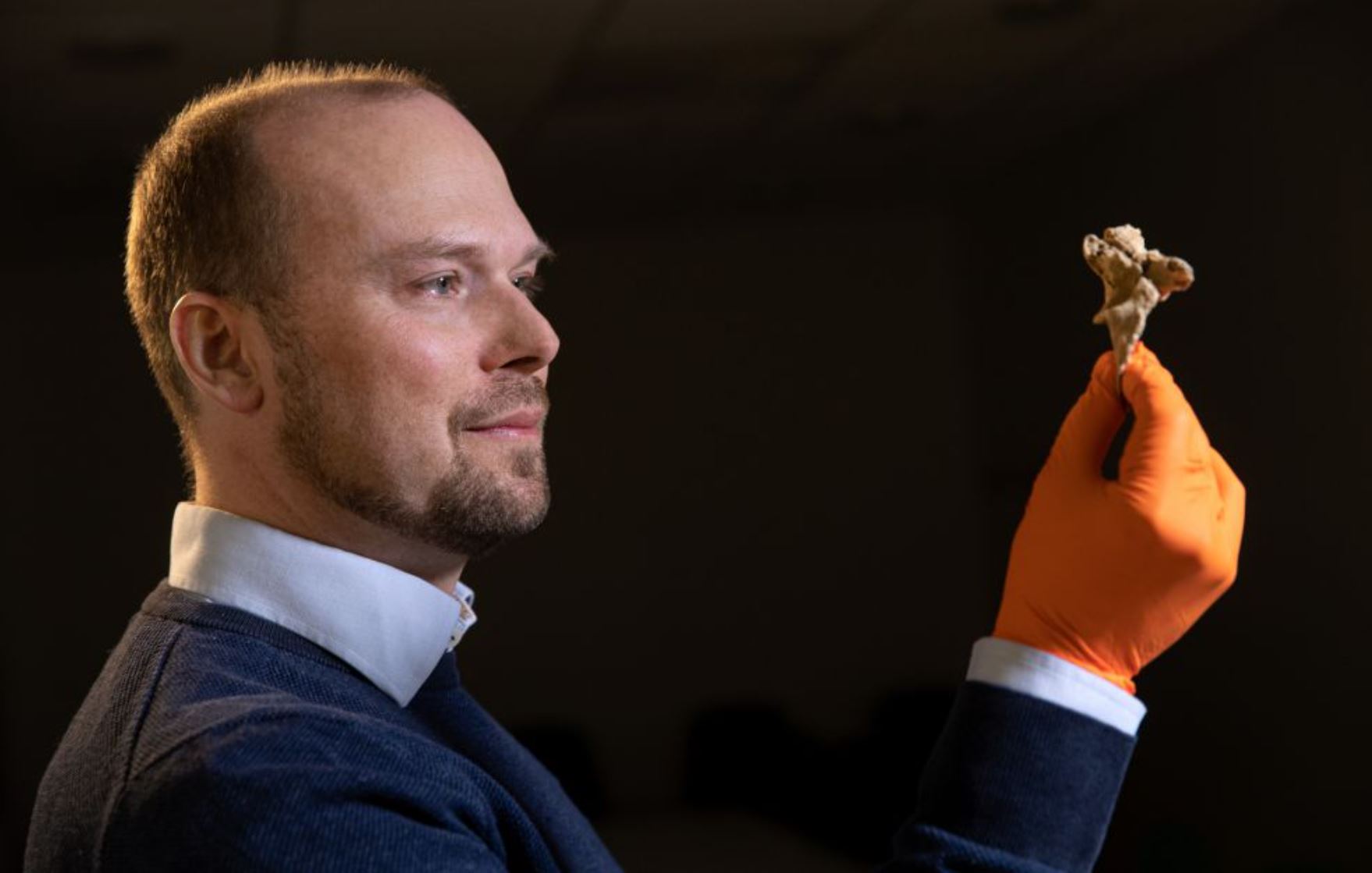
“I not only want to map the genes; I also want to understand the genetic process in detail. It’s a question of identifying the genetic changes that made humans clever, driven, and good engineers several hundred thousand years ago.”

Mattias Jakobsson, 2022.

Moving the cradle of humankind

Knut and Alice Wallenberg Foundation grants SEK 2.1 billion to 118 of Sweden’s top researchers


  • The unknown origins of humans on Swedish radio

    Mattias Jakobsson was featured on Swedish Radio’s morning program (Förmiddag i P1) today, 29 Sept 2026. His conversation with Nicke Nordmark, the program leader, is available at: https://www.sverigesradio.se/avsnitt/manniskans-okanda-ursprung (in Swedish).

  • Diachronic reuse of Neolithic burial monuments by Bronze Age newcomers in Southwestern Britain

    Diachronic reuse of Neolithic burial monuments by Bronze Age newcomers in Southwestern Britain

    A new paper, co-authored by Nikola Vuković, Carolina Bernhardsson and Mattias Jakobsson, from the Human Evolution Program at Uppsala University, in close collaboration with British archaeologists, has recently been published in Scientific Reports:Vuković, N., Bernhardsson, C., Edlund, H., Delbarre, G., Smith, M., Darvill, T., … & Jakobsson, M. (2026). Diachronic reuse of Neolithic burial monuments…

  • Matte Sjölander’s STSM Experience in Utrecht 2026

    Matte Sjölander’s STSM Experience in Utrecht 2026

    In June 2026, Mattias Sjölander visited Utrecht University to host a brainstorming session on integrating subfossil insect and pollen data in future analyses. The visit, a so-called Short-Term Scientific Mission within Open Palaeoecological Data (PalaeOpen), was funded by the European Cooperation in Science and Technology (COST). During my ongoing postdoctoral project at the Center for the Human…