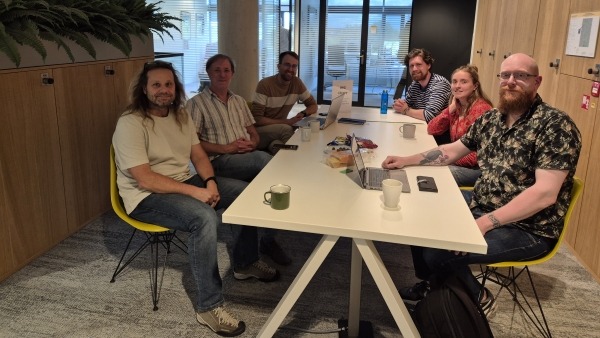
CIRCUS Interdisciplinary Symposium


One of our partner organisations holds an interdisciplinary symposium (at the Uppsala University on 24th October) where the Center’s for the Human Past board members will present our ways of working across scientific disciplines. The registration is free.

Bridging disciplinary differences to make a difference
Efforts to navigate and span the divides between Humanities and Social Sciences, STEM, and Medical Sciences

The pressing issues of our time require solutions that transcend traditional disciplinary boundaries. Efforts to bridge the larger disciplinary divides is a long-held promise and aspiration for interdisciplinary research. But how do we overcome the challenges that such radical interdisciplinarity presents?

Join us for a half-day symposium where researchers working in co-creation with stakeholders and engaging with society, will discuss how they navigate larger disciplinary divides. The symposium will conclude with a mingle, offering a chance to further discuss the topics at hand.

https://www.uu.se/en/centre/circus/events/archive/2024-10-24-circus-interdisciplinary-symposium

  • A new grant to develop cross-cutting research projects

    A new grant to develop cross-cutting research projects

    Uppsala University Future Institutes (UUniFI), CIRCUS (Centre for Integrated Research on Culture and Society) has decided to support our work on the development of an interdisciplinary research project titled “Mechanisms of Human Migration: Causes, Processes & Consequences“. The UUniFI Circus will provide both financial and administrative support and host a seminar series in which project…

  • UU researcher profile: Harald Hammarström documents languages on the verge of extinction

    UU researcher profile: Harald Hammarström documents languages on the verge of extinction

    A professor of linguistics with a Master’s in computer science and a PhD in computational linguistics, Harald goes an extra mile to document the languages that head towards extinction. “Throughout time, smaller languages have always been swallowed up by larger ones. But now, with globalisation, this is happening at an incredibly accelerated pace.” Language has…

  • Carina Schlebusch’s current research—in a nutshell

    Carina Schlebusch’s current research—in a nutshell

    Carina Schlebusch is combining archaeology, genetics and biochemistry with the aim of discovering how human genes have adapted to changing lifestyles over thousands of years. Prehistoric DNA from skeletal remains in Africa can provide answers to questions about diet, disease and survival, and perhaps even offer clues about humanity’s future health. The goal now is…