Meet Mattias Sjölander, our new postdoctoral researcher in interdisciplinary archaeology


Mattias Sjölander is an archaeologist interested in how past human–environment relationships have developed over time. With a background in Environmental Archaeology, he has experience with several analytical methods, including soil chemistry, spectroscopy, and Geographic Information Systems (GIS).
His research emphasises interdisciplinary approaches that integrate evidence, information and methodologies from different disciplines in order to answer complex research questions.

Mattias recently successfully defended his PhD thesis at Umeå University. He studied hunter-gatherer adaptations from a raw material perspective in a North Fennoscandian setting, using spectroscopic data collected on quartzite artefacts.

In his Postdoc project with us he aims to integrate the information from different environmental proxies (fossil insects & pollen) in order to produce a more high-resolution image of how the European landscape has developed during the Holocene period. Such a model can benefit the further development of current archaeological and environmental models of human migration and settlement.

Outside of work, Matte practices Japanese martial arts, including iaido, jodo and naginata, and relaxes with friends in an online game.
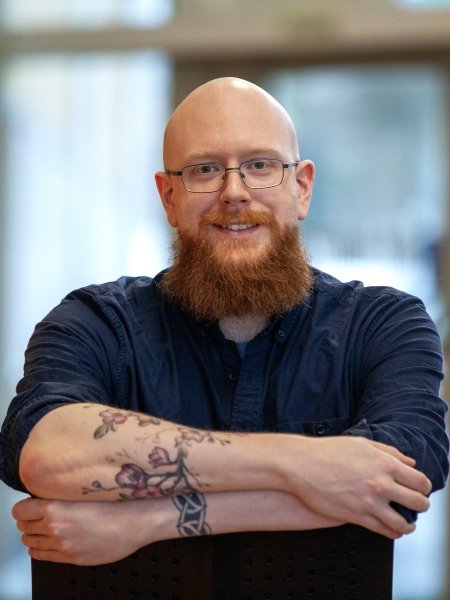
Photograph: Per Melander, Umeå University


  • UU researcher profile: Harald Hammarström documents languages on the verge of extinction

    UU researcher profile: Harald Hammarström documents languages on the verge of extinction

    A professor of linguistics with a Master’s in computer science and a PhD in computational linguistics, Harald goes an extra mile to document the languages that head towards extinction. “Throughout time, smaller languages have always been swallowed up by larger ones. But now, with globalisation, this is happening at an incredibly accelerated pace.” Language has…

  • Carina Schlebusch’s current research—in a nutshell

    Carina Schlebusch’s current research—in a nutshell

    Carina Schlebusch is combining archaeology, genetics and biochemistry with the aim of discovering how human genes have adapted to changing lifestyles over thousands of years. Prehistoric DNA from skeletal remains in Africa can provide answers to questions about diet, disease and survival, and perhaps even offer clues about humanity’s future health. The goal now is…

  • Meet Lydia Furness, our new postdoctoral researcher in interdisciplinary genetics

    Meet Lydia Furness, our new postdoctoral researcher in interdisciplinary genetics

    “My research background lies at the intersection of archaeology, evolutionary anthropology, and biomolecular science. I trained initially as an archaeologist at the University of Liverpool, specialising in archaeological science and early human evolution, which provided a strong foundation in archaeological practice, material analysis, and the ethical dimensions of working with human remains and cultural heritage.”…