A new book on Indo-European research


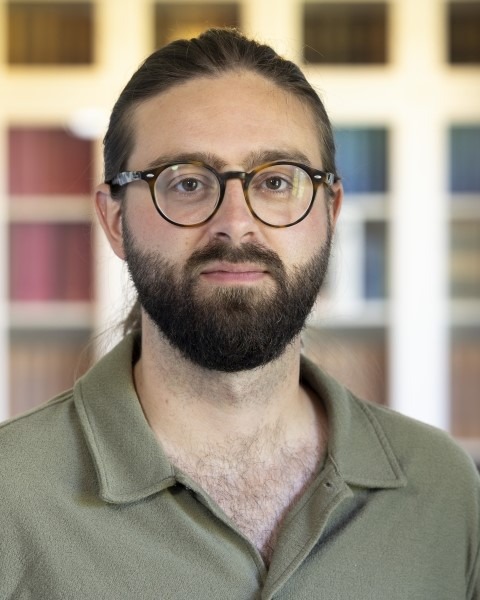
Axel Palmér

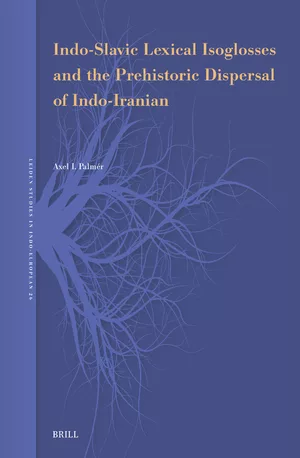
Our colleague, Axel Palmér has just published a book Indo-Slavic Lexical Isoglosses and the Prehistoric Dispersal of Indo-Iranian.

Axel I. Palmér, Ph.D. (2024, Leiden University), is currently a Human Past Junior Fellow at the Swedish Collegium for Advanced Study (SCAS) in Uppsala, Sweden. His research focuses on the origin and development of the Indo-European languages in prehistory.

During the past decade, the ancient DNA revolution has had a massive impact on the scholarly debates on the origins and dispersals of language families. Now, linguists are asking the question: does linguistic and genetic evidence paint the same picture of the human past? This book sheds new light on an old hypothesis on the relatedness of Indo-Iranian and Balto-Slavic languages, by studying unique lexical correspondences of these branches. It argues that their common Indo-Slavic origin supports an emerging picture based on ancient DNA, which shows a genetic relationship between prehistoric populations of Eastern Europe and Central Asia.

The book, in a in series: Leiden Studies in Indo-European, Volume: 26, is freely available for downloading from Brill.com. It would be of interest for (Indo-European) historical linguists, (Bronze Age) archaeologists, and geneticists working on Eurasia, as well as students of the same elds, both post-graduate and under-graduate.

Congratulations, Axel!


  • Diachronic reuse of Neolithic burial monuments by Bronze Age newcomers in Southwestern Britain

    Diachronic reuse of Neolithic burial monuments by Bronze Age newcomers in Southwestern Britain

    A new paper, co-authored by Nikola Vuković, Carolina Bernhardsson and Mattias Jakobsson, from the Human Evolution Program at Uppsala University, in close collaboration with British archaeologists, has recently been published in Scientific Reports:Vuković, N., Bernhardsson, C., Edlund, H., Delbarre, G., Smith, M., Darvill, T., … & Jakobsson, M. (2026). Diachronic reuse of Neolithic burial monuments…

  • Matte Sjölander’s STSM Experience in Utrecht 2026

    Matte Sjölander’s STSM Experience in Utrecht 2026

    In June 2026, Mattias Sjölander visited Utrecht University to host a brainstorming session on integrating subfossil insect and pollen data in future analyses. The visit, a so-called Short-Term Scientific Mission within Open Palaeoecological Data (PalaeOpen), was funded by the European Cooperation in Science and Technology (COST). During my ongoing postdoctoral project at the Center for the Human…

  • The Tie That Binds Us?

    The Tie That Binds Us?

    A new article discussing ancient DNA, kinship studies and human connection across time, co-authored by one of our former Human Past SCAS Fellows, Mehmet Somel, has just been published in the Cambridge Archaeological Journal. Moots, H. M., Tsosie, K. S., & Somel, M. (2026). The Tie That Binds Us? Challenging the Primacy of DNA in Kinship Studies…