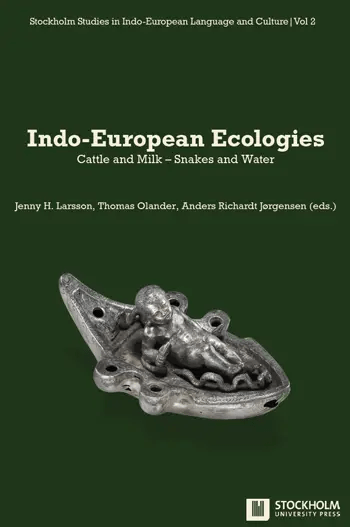
Book alert! Indo-European ecologies: Cattle and milk—snakes and water.


This is the second volume in the series Stockholm Studies in Indo-European Language and Culture (open access). Jenny Larsson, professor in Baltic languages, with a primary interest in the history of languages, is one of the co-editors.

This volume brings together scholars from different fields, exploring how early Indo-European communities understood and mythologised their natural and social environments. From sacred cattle and milk rituals to the chthonic symbolism of serpents and the mythological periphery of water, this interdisciplinary volume uncovers deep-rooted ecological imaginaries embedded in language, archaeology, and comparative mythology. With contributions spanning from the Indo-Iranian plains to the Baltic forests, the book reveals how beliefs about animals, agriculture and the household shaped Indo-European worldviews.

  • UU researcher profile: Harald Hammarström documents languages on the verge of extinction

    UU researcher profile: Harald Hammarström documents languages on the verge of extinction

    A professor of linguistics with a Master’s in computer science and a PhD in computational linguistics, Harald goes an extra mile to document the languages that head towards extinction. “Throughout time, smaller languages have always been swallowed up by larger ones. But now, with globalisation, this is happening at an incredibly accelerated pace.” Language has…

  • Carina Schlebusch’s current research—in a nutshell

    Carina Schlebusch’s current research—in a nutshell

    Carina Schlebusch is combining archaeology, genetics and biochemistry with the aim of discovering how human genes have adapted to changing lifestyles over thousands of years. Prehistoric DNA from skeletal remains in Africa can provide answers to questions about diet, disease and survival, and perhaps even offer clues about humanity’s future health. The goal now is…

  • Meet Lydia Furness, our new postdoctoral researcher in interdisciplinary genetics

    Meet Lydia Furness, our new postdoctoral researcher in interdisciplinary genetics

    “My research background lies at the intersection of archaeology, evolutionary anthropology, and biomolecular science. I trained initially as an archaeologist at the University of Liverpool, specialising in archaeological science and early human evolution, which provided a strong foundation in archaeological practice, material analysis, and the ethical dimensions of working with human remains and cultural heritage.”…