Surprising discovery in prehistoric DNA – traced to our kidneys


Latest research results from Mattias Jakobsson and his colleagues at the Human Evolution Program were featured on local TV (18 Apr 2026).
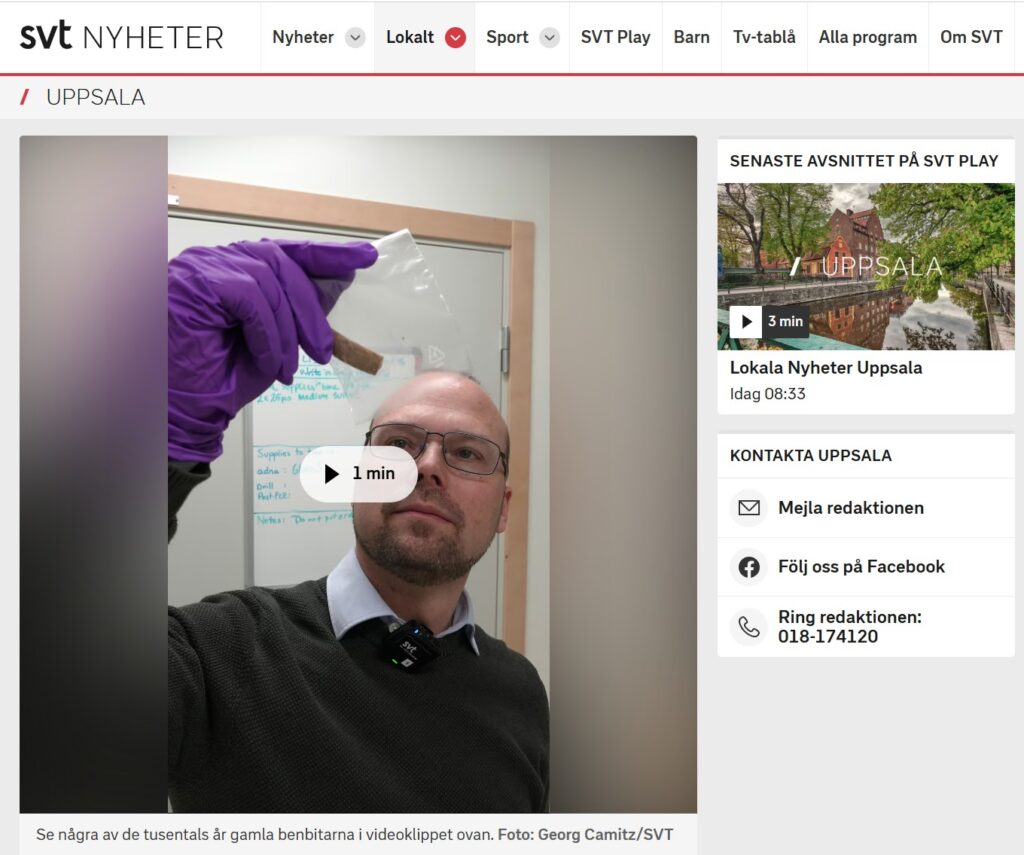
By examining DNA from thousands of years-old bone fragments, researchers have found genetic changes that were present in prehistoric humans – and in us today. The researchers also made a surprising discovery: several of the changes are related to kidney function.

A study from Uppsala University was recently published in the scientific journal Nature. The study is the largest to date of ancient African DNA.

The researchers found genetic changes present in both prehistoric humans and humans today that they believe have been important for human development. Some changes in the immune system and the brain were to be expected; however, genetic variants linked to kidney function were also found. And that was surprising. Nothing like this has anyone else seen before.

– Humans have a unique ability to cool down our bodies through sweating. And then one can imagine that the function of the kidneys and the body’s ability to regulate fluid were crucial for, for example, long-distance hunting, says Mattias Jakobsson in the interview with the reporters.

Related content
Ten-thousand-year-old genomes from southern Africa change picture of human evolution


  • UU researcher profile: Harald Hammarström documents languages on the verge of extinction

    UU researcher profile: Harald Hammarström documents languages on the verge of extinction

    A professor of linguistics with a Master’s in computer science and a PhD in computational linguistics, Harald goes an extra mile to document the languages that head towards extinction. “Throughout time, smaller languages have always been swallowed up by larger ones. But now, with globalisation, this is happening at an incredibly accelerated pace.” Language has…

  • Carina Schlebusch’s current research—in a nutshell

    Carina Schlebusch’s current research—in a nutshell

    Carina Schlebusch is combining archaeology, genetics and biochemistry with the aim of discovering how human genes have adapted to changing lifestyles over thousands of years. Prehistoric DNA from skeletal remains in Africa can provide answers to questions about diet, disease and survival, and perhaps even offer clues about humanity’s future health. The goal now is…

  • Meet Lydia Furness, our new postdoctoral researcher in interdisciplinary genetics

    Meet Lydia Furness, our new postdoctoral researcher in interdisciplinary genetics

    “My research background lies at the intersection of archaeology, evolutionary anthropology, and biomolecular science. I trained initially as an archaeologist at the University of Liverpool, specialising in archaeological science and early human evolution, which provided a strong foundation in archaeological practice, material analysis, and the ethical dimensions of working with human remains and cultural heritage.”…