

Talks of the Past open seminar: From Phonology to Phylogeny: Inferring Language Trees from Cognate Word Forms
Abstract
Linguistic phylogenies are commonly inferred from abstract cognate classifications that encode relationships among lexemes. Although widespread, this practice has well-recognised limitations: it discards phylogenetic signal contained in segmental word forms, restricts the range of evolutionary questions that can be addressed, and treats cognacy judgments, which are hypotheses in their own right, as observed data.
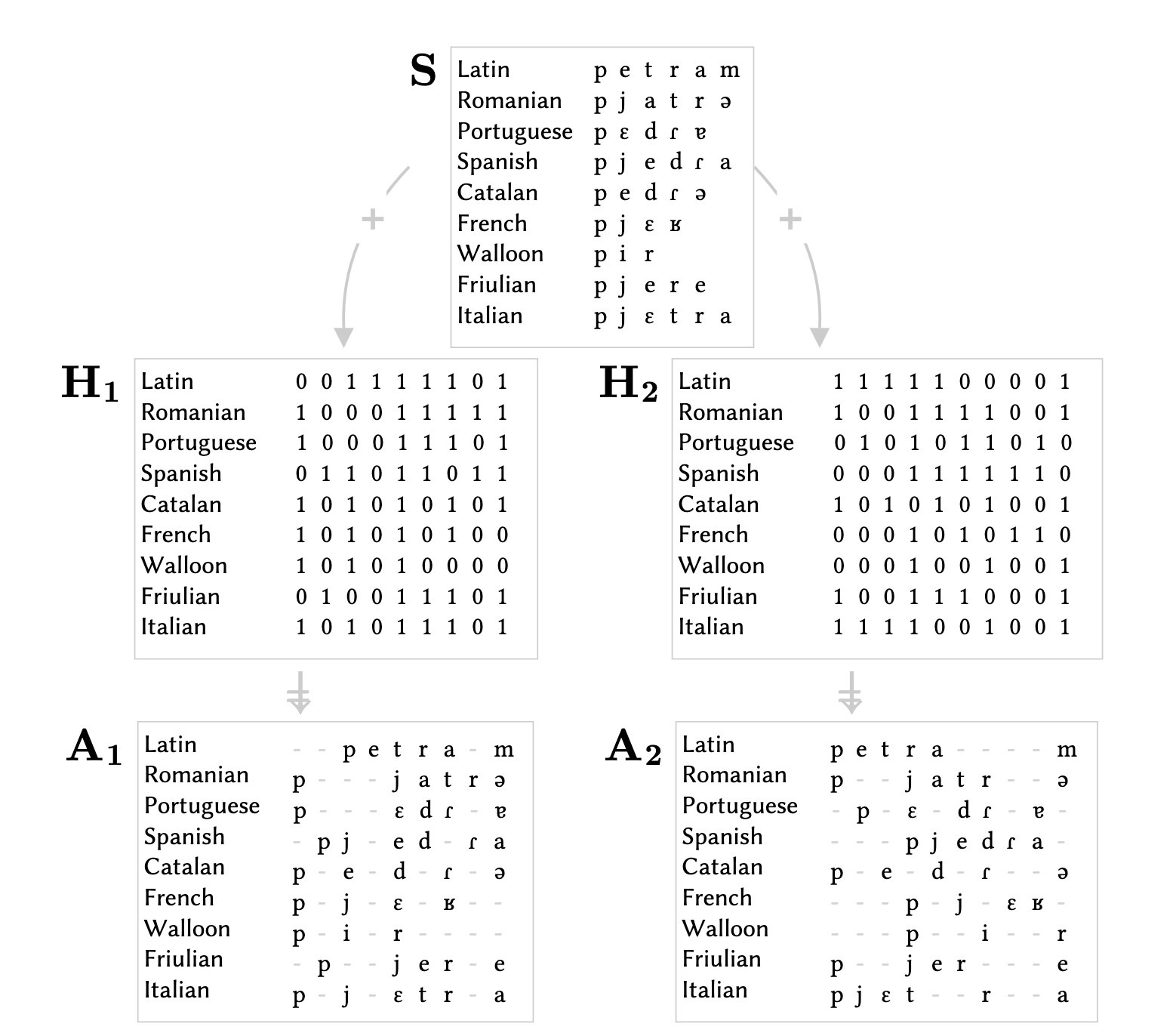
David Goldstein introduces a comparative framework that addresses these limitations by modelling the evolution of cognate word forms directly. The approach adapts the TKF91 model of molecular evolution, originally developed to account for insertion and deletion processes in DNA sequences, to linguistic data. By operating on segmental strings rather than abstract character codings, the framework enables phylogenetic inference from observable word forms and supports quantitative investigation of sound change.

David Goldstein, current Human Past SCAS Senior Fellow, received his PhD from the University of California, Berkeley. His research lies at the intersection of language evolution, classical philology, linguistic theory, and computational modelling. He specialises in the structure and historical development of Indo-European languages, with particular focus on Greek and Latin.