A new book on Indo-European research


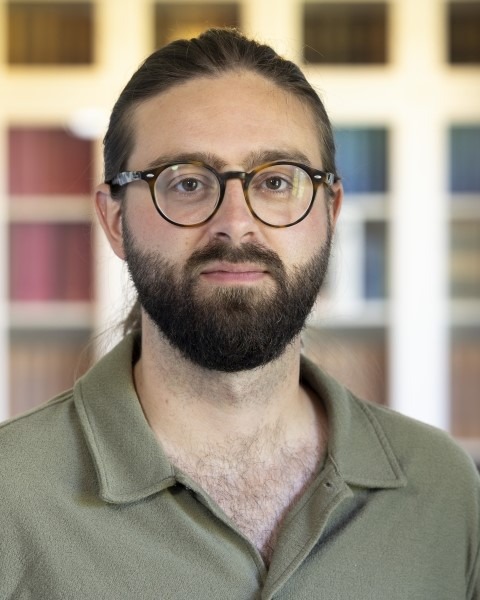
Axel Palmér

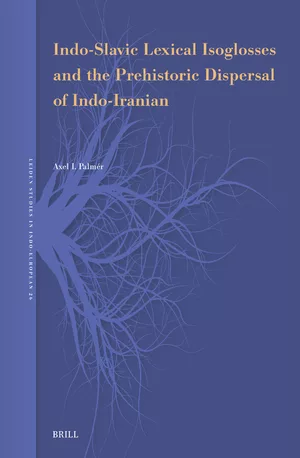
Our colleague, Axel Palmér has just published a book Indo-Slavic Lexical Isoglosses and the Prehistoric Dispersal of Indo-Iranian.

Axel I. Palmér, Ph.D. (2024, Leiden University), is currently a Human Past Junior Fellow at the Swedish Collegium for Advanced Study (SCAS) in Uppsala, Sweden. His research focuses on the origin and development of the Indo-European languages in prehistory.

During the past decade, the ancient DNA revolution has had a massive impact on the scholarly debates on the origins and dispersals of language families. Now, linguists are asking the question: does linguistic and genetic evidence paint the same picture of the human past? This book sheds new light on an old hypothesis on the relatedness of Indo-Iranian and Balto-Slavic languages, by studying unique lexical correspondences of these branches. It argues that their common Indo-Slavic origin supports an emerging picture based on ancient DNA, which shows a genetic relationship between prehistoric populations of Eastern Europe and Central Asia.

The book, in a in series: Leiden Studies in Indo-European, Volume: 26, is freely available for downloading from Brill.com. It would be of interest for (Indo-European) historical linguists, (Bronze Age) archaeologists, and geneticists working on Eurasia, as well as students of the same elds, both post-graduate and under-graduate.

Congratulations, Axel!

  • UU researcher profile: Harald Hammarström documents languages on the verge of extinction

    UU researcher profile: Harald Hammarström documents languages on the verge of extinction

    A professor of linguistics with a Master’s in computer science and a PhD in computational linguistics, Harald goes an extra mile to document the languages that head towards extinction. “Throughout time, smaller languages have always been swallowed up by larger ones. But now, with globalisation, this is happening at an incredibly accelerated pace.” Language has…

  • Carina Schlebusch’s current research—in a nutshell

    Carina Schlebusch’s current research—in a nutshell

    Carina Schlebusch is combining archaeology, genetics and biochemistry with the aim of discovering how human genes have adapted to changing lifestyles over thousands of years. Prehistoric DNA from skeletal remains in Africa can provide answers to questions about diet, disease and survival, and perhaps even offer clues about humanity’s future health. The goal now is…

  • Meet Lydia Furness, our new postdoctoral researcher in interdisciplinary genetics

    Meet Lydia Furness, our new postdoctoral researcher in interdisciplinary genetics

    “My research background lies at the intersection of archaeology, evolutionary anthropology, and biomolecular science. I trained initially as an archaeologist at the University of Liverpool, specialising in archaeological science and early human evolution, which provided a strong foundation in archaeological practice, material analysis, and the ethical dimensions of working with human remains and cultural heritage.”…