Carina Schlebusch’s current research—in a nutshell


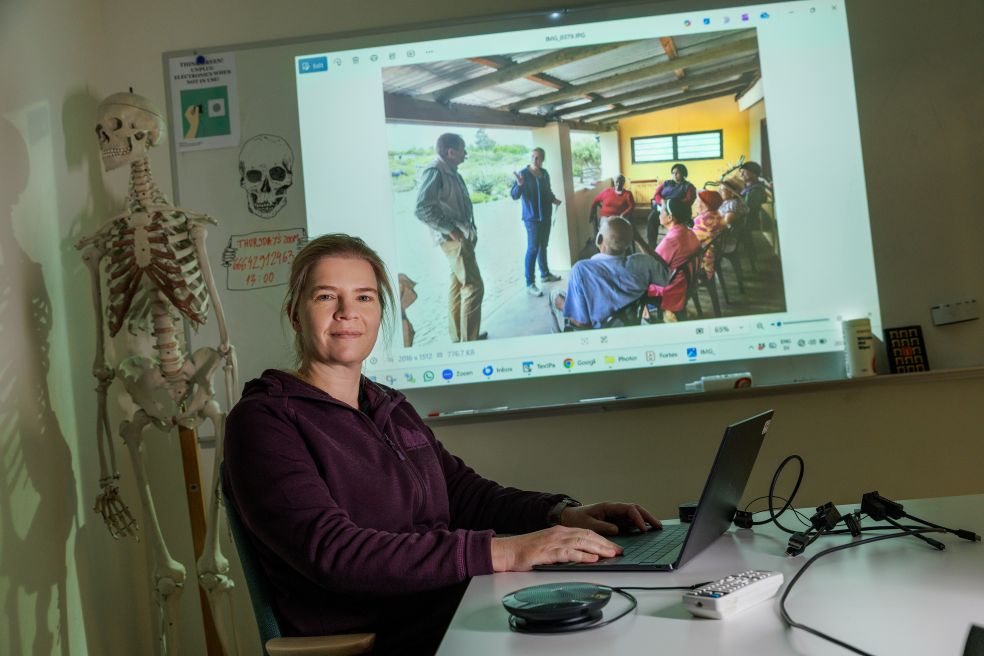
Photo: Magnus Bergström

Carina Schlebusch is combining archaeology, genetics and biochemistry with the aim of discovering how human genes have adapted to changing lifestyles over thousands of years.

Prehistoric DNA from skeletal remains in Africa can provide answers to questions about diet, disease and survival, and perhaps even offer clues about humanity’s future health.

The goal now is to understand how the transition to agriculture affected people’s health and diet and how humans adapted genetically to their new lifestyle. Schlebusch sees parallels with our own time.

“When contemporary hunter-gatherers move into cities, they often develop health problems such as obesity and cardiovascular disease. Our bodies are adapted to scarcity, not abundance. By understanding how our ancestors coped with change, we can better understand our own challenges.”

Carina’s research, funded by the Knut and Alice Wallenberg Foundation, is featured in an article on the foundation’s website.


  • A new grant to develop cross-cutting research projects

    A new grant to develop cross-cutting research projects

    Uppsala University Future Institutes (UUniFI), CIRCUS (Centre for Integrated Research on Culture and Society) has decided to support our work on the development of an interdisciplinary research project titled “Mechanisms of Human Migration: Causes, Processes & Consequences“. The UUniFI Circus will provide both financial and administrative support and host a seminar series in which project…

  • UU researcher profile: Harald Hammarström documents languages on the verge of extinction

    UU researcher profile: Harald Hammarström documents languages on the verge of extinction

    A professor of linguistics with a Master’s in computer science and a PhD in computational linguistics, Harald goes an extra mile to document the languages that head towards extinction. “Throughout time, smaller languages have always been swallowed up by larger ones. But now, with globalisation, this is happening at an incredibly accelerated pace.” Language has…

  • Carina Schlebusch’s current research—in a nutshell

    Carina Schlebusch’s current research—in a nutshell

    Carina Schlebusch is combining archaeology, genetics and biochemistry with the aim of discovering how human genes have adapted to changing lifestyles over thousands of years. Prehistoric DNA from skeletal remains in Africa can provide answers to questions about diet, disease and survival, and perhaps even offer clues about humanity’s future health. The goal now is…