Surprising discovery in prehistoric DNA – traced to our kidneys


Latest research results from Mattias Jakobsson and his colleagues at the Human Evolution Program were featured on local TV (18 Apr 2026).
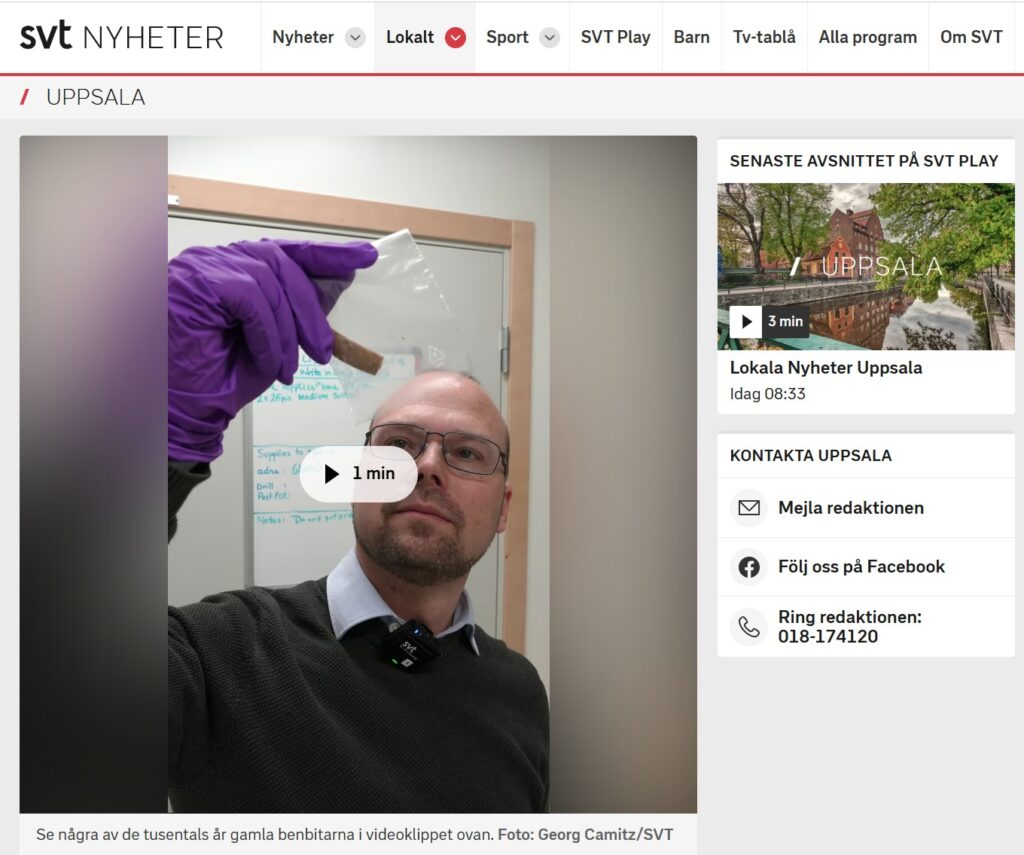
By examining DNA from thousands of years-old bone fragments, researchers have found genetic changes that were present in prehistoric humans – and in us today. The researchers also made a surprising discovery: several of the changes are related to kidney function.

A study from Uppsala University was recently published in the scientific journal Nature. The study is the largest to date of ancient African DNA.

The researchers found genetic changes present in both prehistoric humans and humans today that they believe have been important for human development. Some changes in the immune system and the brain were to be expected; however, genetic variants linked to kidney function were also found. And that was surprising. Nothing like this has anyone else seen before.

– Humans have a unique ability to cool down our bodies through sweating. And then one can imagine that the function of the kidneys and the body’s ability to regulate fluid were crucial for, for example, long-distance hunting, says Mattias Jakobsson in the interview with the reporters.

Related content
Ten-thousand-year-old genomes from southern Africa change picture of human evolution


  • Mattias Jakobsson receives an award from the Royal Society of Arts and Sciences of Uppsala

    Mattias Jakobsson receives an award from the Royal Society of Arts and Sciences of Uppsala

    The 2026 prize for an interdisciplinary achievement of outstanding quality is awarded to Mattias Jakobsson for his distinguished research into human origins and prehistory. By linking Stone Age genomic data with archaeology and linguistics, Jakobsson has shown that there were different populations that engaged in farming, and hunting and gathering. Read more about the Royal…

  • Gut microbes that trace ancient human journeys

    Gut microbes that trace ancient human journeys

    The newest piece in Nature’s News & Views, co-authored by our PI, Carina Schlebusch and Maja Vukovikj from Human Evolution Program at Uppsala University discusses the study by Carter et al. exploring what our gut microbiomes can tell us about human population history. Humans have never travelled alone. When our ancestors spread out of Africa…

  • The unknown origins of humans on Swedish radio

    Mattias Jakobsson was featured on Swedish Radio’s morning program (Förmiddag i P1) today, 29 Sept 2026. His conversation with Nicke Nordmark, the program leader, is available at: https://www.sverigesradio.se/avsnitt/manniskans-okanda-ursprung (in Swedish). They talked about Homo Sapiens, Neanderthals, and Denisovans and their coexistence; the unknown DNA in our genes; and the possibility that humans as we know…